Running a debris removal business involves more than hauling away unwanted materials. Workers may deal with heavy debris, sharp objects, damaged structures, and unexpected accidents. A single incident can lead to property damage, injuries, or expensive claims.
That’s why debris removal insurance is important. It helps protect your business against certain risks while you handle cleanup, demolition waste, and hauling jobs. However, not every loss is covered, so understanding your policy matters.
What Is Debris Removal Insurance?
Debris removal insurance refers to insurance coverage that helps protect businesses involved in removing, hauling, and disposing of waste or construction materials.
It is not always a separate insurance policy. Depending on your operations, protection may come from general liability, commercial auto, workers’ compensation, and commercial property insurance.

The right coverage depends on the type of materials you handle, the equipment you use, and the services you provide.
What Does Debris Removal Insurance Cover?
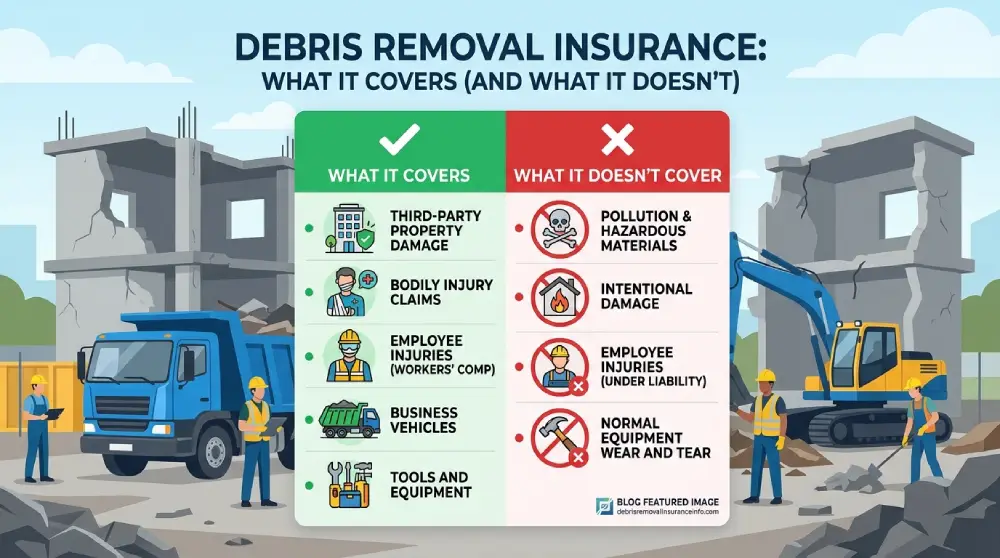
The coverage available depends on your policy, but common protections include:
1. Third-Party Property Damage
If your crew accidentally damages a customer’s driveway, fence, building, or other property while removing debris, general liability insurance may help cover the claim.
2. Bodily Injury Claims
If someone outside your business gets injured because of your work, liability coverage may help pay for medical expenses and legal costs, subject to policy terms.
3. Employee Injuries
Workers’ compensation insurance generally helps cover eligible medical expenses and lost wages when employees get injured while working.
4. Business Vehicles
Commercial auto insurance can protect vehicles used to transport debris. Depending on the policy, it may cover accidents, vehicle damage, and liability involving other people or property.
5. Tools and Equipment
Commercial property or equipment coverage may help protect items such as dumpsters, trailers, loaders, and other business equipment against covered losses.
What Debris Removal Insurance Doesn’t Cover
Having insurance does not mean every accident or business expense is automatically covered.
Common exclusions and limitations may include:
- Intentional damage or illegal activities
- Certain pollution and hazardous material claims
- Damage to your own property under a general liability policy
- Employee injuries under general liability insurance
- Normal equipment wear and tear
- Contractual obligations not covered by the policy
For example, if your business removes asbestos or other hazardous materials, a standard liability policy may not provide the protection you need. You may require specialized environmental or pollution liability coverage.
Always review exclusions and ask your insurer about the specific materials your business handles.
Demolition and Debris Removal Insurance: What’s Different?
Demolition and debris removal insurance needs can vary depending on the work involved.
A business that collects household junk generally faces different risks from a contractor demolishing walls, removing concrete, or clearing construction sites.
Demolition work may involve structural damage, falling materials, heavy machinery, and greater injury risks. Contractors should make sure their policies specifically cover demolition activities
General liability insurance for junk removal business owners is one of the most important types of protection to consider.
What Is Debris Removal Coverage After a Property Loss?
Debris removal coverage can also refer to a provision in a property insurance policy.
This type of coverage may help pay to remove damaged materials after a covered event, such as a fire or storm. For example, if a fire damages a commercial building, the property policy may help cover the cost of clearing the resulting debris.
This is different from insurance purchased by a business that provides debris removal services. Check your policy to understand which meaning applies and what limits are available.
How Much Does Debris Removal Insurance Cost?
The debris removal insurance cost depends on your business activities, location, workforce, revenue, equipment, and coverage limits.
A junk removal company with a small truck and a few employees may have different insurance costs from a demolition contractor using heavy machinery.
Factors that affect premiums include:
- Type of debris handled
- Demolition or hazardous material exposure
- Number of employees
- Vehicle count and driving history
- Claims history
- Coverage limits and deductibles
Similarly, junk removal insurance cost can vary widely between businesses. Request quotes from multiple insurers and compare coverage details instead of choosing based on price alone.
Conclusion:
Debris removal work comes with risks that can affect your employees, vehicles, equipment, and customers. The right debris removal insurance helps protect your business against covered accidents and unexpected claims.
Review your operations carefully, understand policy exclusions, and choose coverage that matches the materials and services you handle.
Frequently Asked Questions
What is debris removal?
Debris removal is the process of collecting, hauling, and disposing of unwanted materials from homes, construction sites, commercial properties, or damaged buildings.
Is debris removal insurance a separate policy?
Not always. It may involve several policies, including general liability, commercial auto, workers’ compensation, and equipment coverage.
Does general liability cover debris removal work?
It may cover certain third-party injury and property damage claims arising from covered operations. Demolition and hazardous material work may require additional protection.
Does insurance cover concrete debris removal?
It can, but the policy must cover your specific operations. Confirm that concrete breaking, loading, hauling, and disposal are included where applicable.
Does debris removal insurance cover employee injuries?
General liability typically does not cover employee injuries. Workers’ compensation is generally used for eligible workplace injury claims.
How much does junk removal insurance cost?
Costs depend on business size, services, vehicles, employees, location, and coverage limits. Insurers can provide quotes based on your operations.
Do junk removal businesses need commercial auto insurance?
Businesses using vehicles for hauling should consider commercial auto insurance. Personal auto policies may not cover business use.
Does insurance cover hazardous debris removal?
Not necessarily. Asbestos, chemicals, and other hazardous materials may require specialized pollution or environmental liability coverage.
What insurance do demolition contractors need?
They may need general liability, commercial auto, workers’ compensation, equipment coverage, and specialized protection for demolition-related risks.
Does property insurance cover debris removal after a fire?
Some property policies include debris removal coverage after a covered loss, subject to policy limits and conditions.