Electrical contractors work with expensive equipment, complex wiring, job-site hazards, and strict safety requirements. Even a small mistake can lead to property damage, injuries, or costly repairs. Having insurance is important, but simply purchasing a policy does not guarantee every risk is covered.
Many contractors discover gaps only after filing a claim. Understanding what your policy includes, what it excludes, and where additional protection may be needed can help prevent unpleasant surprises.
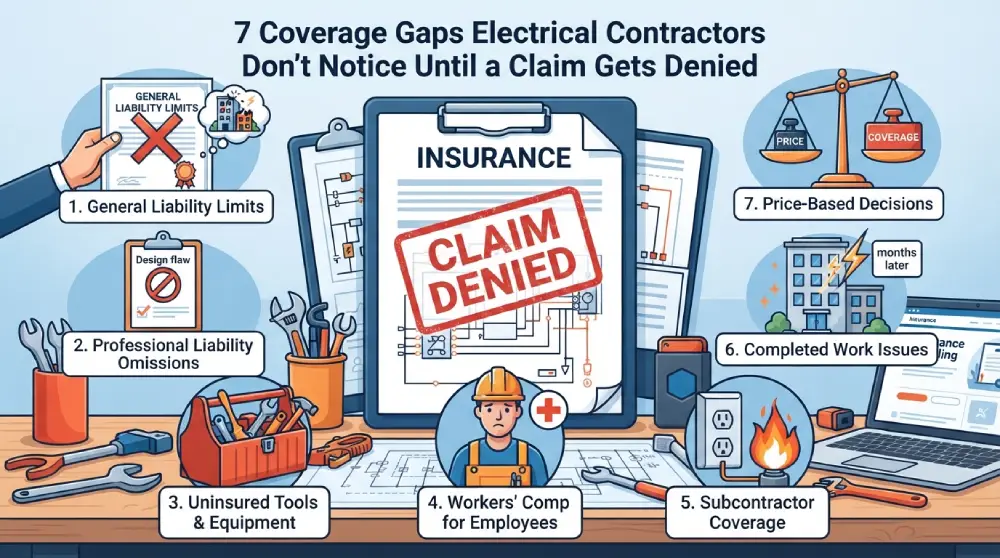
Here are seven common coverage gaps to review in your electrical contractor insurance before the next job.
1. Assuming General Liability Covers Every Type of Damage
General liability insurance is an important part of insurance for electrical contractors. It can help cover certain third-party bodily injury and property damage claims arising from business operations.
However, it does not cover every type of loss. For example, damage to your own tools, equipment, or business property generally requires separate coverage. Professional mistakes may also fall outside a standard general liability policy.
Contractors should review their general liability insurance for electrical contractors carefully and understand the exclusions, limits, and additional coverage options.
2. Not Having Professional Liability Coverage
An electrical contractor can face claims that go beyond physical damage. A client might allege that an incorrect design, recommendation, or technical specification caused financial losses.
Standard electrician liability insurance may not cover these professional service claims. Professional liability insurance, also called errors and omissions coverage, may help protect against certain allegations of negligence or mistakes in professional services.
This coverage can be particularly relevant for contractors involved in electrical planning, consulting, system design, or technical recommendations.

3. Leaving Tools and Equipment Uninsured
Electrical contractors often carry expensive testing devices, drills, ladders, wiring equipment, and specialized tools between job sites. If these items are stolen, damaged, or destroyed, replacing them can become expensive.
A general business property policy may not automatically cover equipment taken away from your main business location.
Inland marine or contractors’ equipment insurance may provide protection for eligible tools and equipment while they are being transported or used at different job sites. Check coverage limits, deductibles, and exclusions before assuming your equipment is protected.
4. Overlooking Workers’ Compensation Requirements
Electrical work can involve falls, burns, electrical shocks, and other workplace injuries. If an employee gets hurt, the contractor may face medical expenses, lost wages, and legal responsibilities.
Workers’ compensation requirements vary by state and business structure. Some contractors mistakenly assume that general liability insurance will cover employee injuries, but it typically does not.
Review your local requirements and make sure your policy reflects your actual workforce. This is an important part of electrical contracting insurance, particularly for businesses that hire employees or use subcontractors.
5. Not Checking Subcontractor Coverage
Many electrical contractors hire subcontractors for larger projects or specialized work. However, problems can arise when a subcontractor causes damage or an injury and does not have adequate insurance.
Do not assume your own policy will automatically cover every subcontractor-related claim.
Before work begins, request certificates of insurance and verify that the subcontractor has appropriate coverage. Also review contract requirements, additional insured provisions, and indemnification clauses with a qualified insurance or legal professional.
6. Having Inadequate Coverage for Completed Work
A contractor’s responsibility does not always end when a project is finished. A wiring problem discovered months later could lead to property damage or an injury.
General liability policies may include products-completed operations coverage, which can address certain claims involving completed work. However, the coverage depends on the policy language, exclusions, and circumstances of the claim.
Electrical construction insurance should be reviewed to make sure completed operations coverage and its limits are appropriate for the type and size of projects you handle.
7. Choosing Coverage Based Only on Price
Searching for the cheapest business insurance for electricians is understandable, especially for small businesses managing tight budgets. But the lowest premium does not always provide the protection your business needs.
A cheaper policy may have lower limits, higher deductibles, or exclusions that leave important risks uncovered.
When comparing electrical contractor insurance cost, look beyond the monthly or annual premium. Consider the coverage limits, exclusions, deductibles, endorsements, and claims support.
The right policy should reflect your actual work rather than simply offer the lowest price.

What Does Electrical Contractor Insurance Usually Cost?
The cost of electrical contractor insurance depends on several factors, including business size, location, number of employees, annual revenue, claims history, and the type of electrical work performed.
A small independent electrician may pay less than a contractor managing a large crew and handling commercial construction projects. Higher-risk jobs and larger coverage limits can also increase premiums.
When comparing electrician insurance cost, request quotes based on the same coverage limits and policy features. This makes it easier to understand whether one option offers better value than another.
Conclusion:
The right electrical contractor insurance should protect more than just the basics. From general liability and professional mistakes to equipment, employees, and completed operations, every part of your business deserves attention. Reviewing these seven coverage gaps can help you identify weaknesses before they become expensive problems.
Frequently Asked Questions
What insurance does an electrical contractor need?
Common coverage includes general liability, workers’ compensation where required, commercial auto, and tools and equipment insurance. Some contractors may also need professional liability or other specialized coverage.
Is general liability insurance enough for electricians?
Not always. General liability covers certain third-party injury and property damage claims, but it generally does not cover employee injuries, professional errors, or damage to your own equipment.
What does general liability insurance for electrical contractors cover?
It can help cover eligible third-party bodily injury, property damage, and certain legal defense costs. Actual coverage depends on the policy terms and exclusions.
How much does electrical contractor insurance cost?
The price varies based on location, business size, payroll, revenue, claims history, services, and coverage limits. Getting multiple quotes is the best way to estimate your cost.
Does insurance for electricians cover tools and equipment?
Not automatically. Contractors may need a separate tools and equipment policy or inland marine coverage to protect eligible items at job sites and during transportation.
Do independent electricians need insurance?
Even independent electricians can face property damage claims, injuries, and equipment losses. Insurance can help manage these financial risks, and certain clients or contracts may require proof of coverage.
What is the difference between electrician liability insurance and professional liability?
General liability typically addresses certain third-party injury and property damage claims. Professional liability addresses eligible claims involving mistakes or negligence in professional services.
Does electrical contracting insurance cover subcontractors?
Coverage is not automatic in every situation. Contractors should review their policy and verify subcontractor insurance before allowing work to begin.
Can an insurance claim be denied because of an exclusion?
Yes. An insurer may deny a claim if the loss falls under a policy exclusion, is outside the coverage terms, or does not meet other policy requirements.