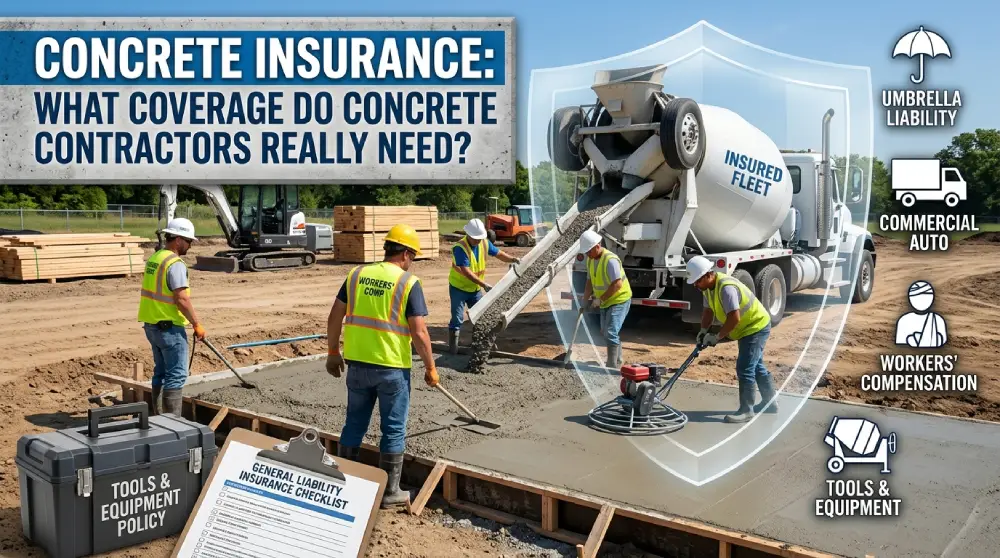
Running a concrete business comes with risks. A worker could get injured, equipment could be damaged, or wet concrete could cause property damage. Even a small accident can lead to expensive repairs or legal claims.
That’s why concrete insurance is important. It helps protect your business, employees, equipment, and finances when something goes wrong.
But what coverage do concrete contractors actually need? Let’s look at the main policies and what they cover.
What Is Concrete Insurance?
Concrete insurance is a combination of business insurance policies designed to protect concrete contractors from common job-related risks.
Whether you handle driveways, sidewalks, foundations, or large commercial projects, the right coverage can help protect your business from unexpected expenses.
Your insurance needs will depend on your services, employees, equipment, and contract requirements.
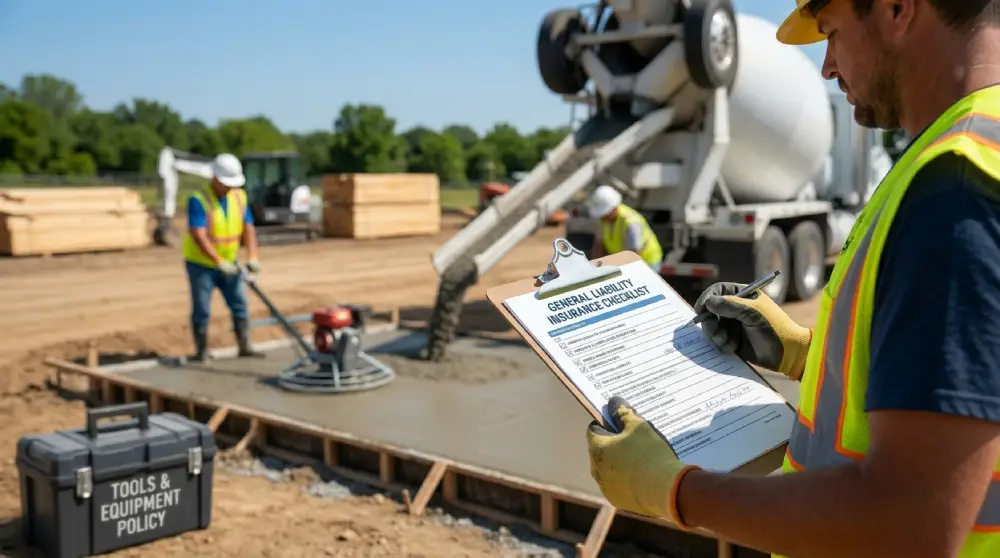
Types of Insurance for Concrete Contractors
Not every contractor needs the same policies. Here are some common options to consider.
General Liability Insurance
General liability is one of the most important policies for concrete businesses. It helps cover third-party injury and property damage claims.
For example, if wet concrete damages a customer’s driveway or a visitor trips over materials at your job site, this policy may help cover eligible costs.
Many clients and general contractors require proof of general liability before allowing work to begin.
Workers’ Compensation Insurance
Concrete work involves heavy materials, machinery, and physically demanding tasks. Workers can suffer injuries while pouring concrete, lifting materials, or operating equipment.
Workers’ compensation helps cover eligible medical expenses and lost wages after work-related injuries. State requirements vary, but businesses with employees may be required to carry it.
Commercial Auto Insurance
Concrete contractors often use trucks, trailers, and other vehicles to transport materials, tools, and equipment.
Commercial auto insurance helps cover business vehicle accidents, injuries, and property damage, depending on the policy.
Personal auto insurance may not cover vehicles used for business purposes.
Tools and Equipment Insurance
Concrete businesses rely on expensive tools and machinery, including mixers, saws, pumps, and finishing equipment.
This coverage can help pay for covered theft or damage. Check whether your policy protects equipment at job sites, in storage, and while being transported.
Umbrella Insurance for Concrete Contractors
Some projects carry higher liability risks than a standard policy can cover.
Umbrella Insurance for Concrete Contractors provides additional liability limits above certain underlying policies. It can be useful when working on larger projects or when clients require higher limits.
Why Do Concrete Contractors Need General Liability Insurance?
General liability is especially important because concrete work can affect other people’s property and safety.
For example:
- Concrete splashes damage nearby property.
- A visitor slips on a wet work surface.
- Heavy equipment damages a customer’s driveway.
- A worker accidentally damages a neighboring structure.
General liability insurance for flat concrete contractors can help cover eligible third-party claims involving these situations. However, coverage depends on the policy terms and exclusions.
How Much Does Concrete Business Insurance Cost?
There is no fixed price for Concrete Business Insurance. Your premium depends on several factors:
- Type of concrete services
- Annual revenue and payroll
- Number of employees
- Business location
- Claims history
- Equipment and vehicles
- Coverage limits and deductibles
For example, a small driveway contractor may have different insurance costs from a company handling commercial foundations and large construction projects.
The best way to know your price is to request quotes based on your actual business activities.
How to Find Affordable Insurance for a Concrete Business
You don’t always need the most expensive policy, but choosing coverage based only on price can leave your business exposed.
If you’re searching for cheap insurance companies for small concrete businesses, compare the coverage instead of looking at premiums alone.
Here are a few tips:
- Request quotes from multiple insurers.
- Compare policy limits and deductibles.
- Ask about discounts for safety programs.
- Review exclusions carefully.
- Make sure your equipment and services are properly covered.
- Avoid paying for coverage your business doesn’t need.
Look for insurance companies specializing in small concrete businesses if you need help finding policies that match your trade.
How to Choose Insurance for Your Concrete Company
When comparing insurance for concrete contractors, think about the work you perform every day.
A company that installs residential driveways may have different needs from one that handles commercial paving or structural concrete work.
Check these details before choosing a policy:
- Does it cover all your concrete services?
- Are employees and subcontractors properly accounted for?
- Does it include the required liability limits?
- Are tools and equipment protected?
- Does it meet your clients’ contract requirements?
Also, ask whether the insurer has experience with construction businesses. This can make it easier to find suitable insurance for concrete company operations.
What About Paving Contractor Insurance?
Businesses that install driveways, parking lots, sidewalks, and other paved surfaces may need additional coverage based on their work.
Paving contractor insurance may include general liability, workers’ compensation, commercial auto, and equipment coverage.
If you also handle asphalt work, excavation, or heavy machinery, explain these services when requesting a quote. Accurate information helps ensure your policy reflects the actual risks of your business.
Frequently Asked Questions
What insurance does a concrete contractor need?
Most contractors should consider general liability, workers’ compensation, commercial auto, and equipment coverage. The right combination depends on their work and state requirements.
Is general liability insurance required for concrete contractors?
It may not be required by every state, but many clients and general contractors require it before work begins.
Does concrete insurance cover property damage?
General liability may cover certain third-party property damage claims, depending on the policy and exclusions.
Do concrete contractors need workers’ compensation?
Businesses with employees may be required to carry workers’ compensation under state law.
Does insurance cover stolen concrete equipment?
Tools and equipment coverage may protect against covered theft. Check your policy for location and transportation restrictions.
Is umbrella insurance worth it for concrete contractors?
It can be useful for businesses that work on larger projects or need liability limits beyond their primary policies.
How much does insurance for concrete contractors cost?
Costs vary based on revenue, payroll, location, claims history, services, and coverage limits. Request quotes for an accurate estimate.
Can small concrete businesses get affordable insurance?
Yes. Small businesses can compare quotes, adjust coverage limits, and ask about available discounts to find suitable options.
What is the difference between concrete and paving contractor insurance?
The basic policies may be similar, but coverage needs can change depending on whether the business handles concrete, asphalt, excavation, or other paving work.
How can I find the right insurance company for my concrete business?
Compare several insurers, review their construction coverage, check exclusions, and make sure their policies match your actual work.