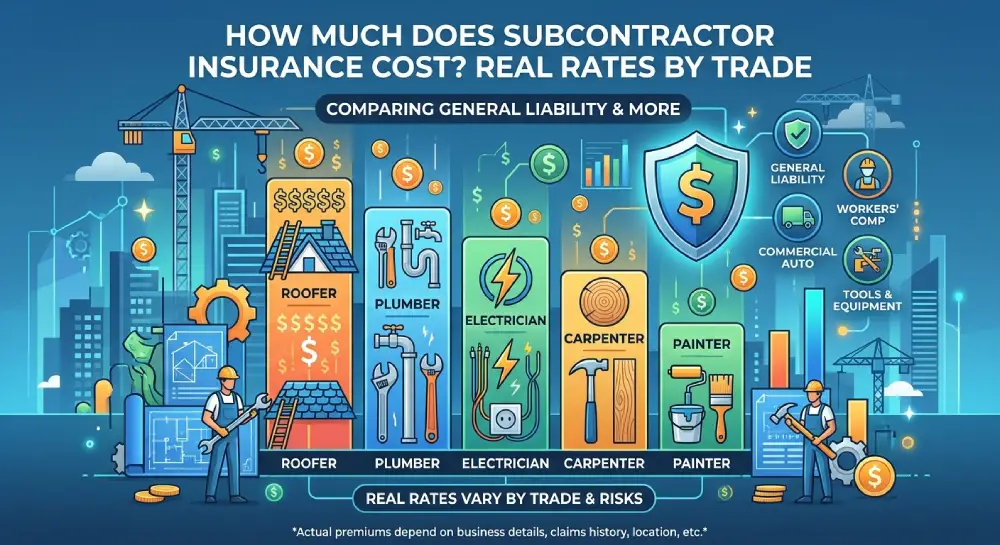
Insurance is a key business cost for construction professionals. If you’re an electrician, plumber, roofer, or carpenter, the right coverage can help you safeguard your business against the unexpected, damage to your property and lawsuits.
Some factors that influence the cost of subcontractor insurance include your trade, size of your business, payroll, location, and claims history. A roofing company with multiple employees will be a lot more expensive than a solo painter. Knowing the standard rates can aid you in budgeting appropriately and fulfilling the needs of the companies you deal with.
How Much Does Subcontractor Insurance Cost by Trade?
General liability is often the starting point for estimating insurance expenses. The following figures are published monthly averages or medians for small U.S. contractor businesses. They are not guaranteed quotes.
| Trade | General Liability (Monthly) | Estimated Annual Cost |
| Electrician | $61 | $732 |
| Carpenter | $94 | $1,128 |
| HVAC contractor | $101 | $1,212 |
| Plumber | $147 | $1,764 |
| General contractor | $162 | $1,944 |
| Roofer | $317 | $3,804 |
| Painter | $72 | $864 |
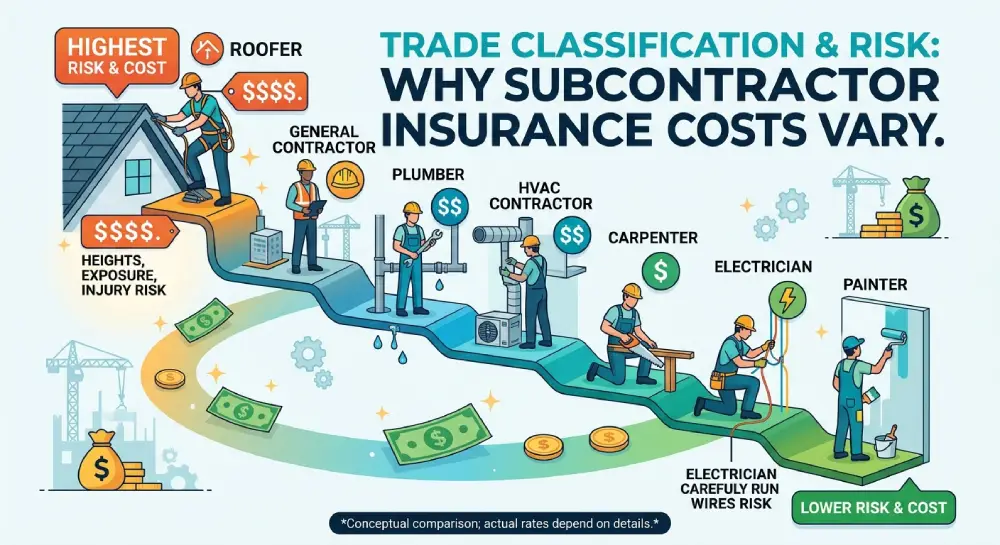
These figures show why trade classification matters. Roofing generally costs more to insure because working at heights creates greater injury and property damage exposure. Electricians and painters often have lower general liability premiums, although individual business circumstances can change the price.
For context, construction businesses purchasing workers’ compensation coverage through Insureon have a median premium of approximately $175 per month. Your actual cost depends heavily on employee payroll and job classifications.
What Types of Coverage Do Subcontractors Need?
No single policy is able to cover all construction risks. For most companies, coverage is a mix of several types of coverage based on their work and contractual needs.
- General liability: Helps cover eligible third-party bodily injury and property damage claims.
- Workers’ compensation: Covers qualifying employee work-related injuries and illnesses.
- Commercial auto: Protects business vehicles against covered accidents and other specified losses.
- Tools and equipment: Helps protect covered tools and machinery against theft or damage.
- Professional liability: May help cover certain claims involving professional advice, design, or service errors.
- Umbrella insurance: Provides additional liability limits above certain underlying policies.
The right subcontractor insurance package depends on the work you perform, whether you employ workers, and the coverage limits required for your jobs.
What Factors Affect Insurance Costs?
Several factors influence the price of a policy:
Trade and job hazards: Roofing, excavation, and structural work generally carry different risks from painting or basic finish work.
Payroll and revenue: Workers’ compensation premiums are influenced by payroll, while general liability pricing may consider revenue, payroll, or other rating factors.
Location: State regulations, local claim trends, and insurance markets can affect premiums.
Claims history: Previous accidents or frequent claims may increase renewal costs.
Coverage limits: Higher limits and additional endorsements usually increase the premium.
Business experience: New businesses may have fewer records for insurers to evaluate, which can affect pricing.
Before purchasing subcontractor insurance, provide accurate information about your operations. Incorrect payroll or revenue estimates can lead to additional premium charges after an insurance audit.
Why Is Insurance Important When Hiring Subcontractors?
Checking insurance is one aspect that is vital for a general contractor to manage in construction projects. A subcontractor could be responsible for risks of injury, damage to property, equipment or incomplete installations.
Before hiring subcontractors, request current certificates of insurance and confirm that the coverage matches the job requirements. Don’t take words for granted that a business is insured.
By properly transferring risk, the financial exposure of work done by other businesses can be minimized. This is one of the reasons why contractors have contractual risk transfer and need the right insurance options.
What Should an Agreement Say About Insurance?
A written agreement that thoroughly outlines who will be responsible for insurance coverage, insurance limits and claims processes.
A subcontractor agreement should include details of work being carried out, insurance obligations, payment conditions and damage requirements. The contractor and subcontractor agreement should also clarify if the subcontractor will be required to keep the coverage during the project.
If looking at a subcontractor contract, you should look for additional insured designation, certificate of insurance and policy limits. An endorsement might be required; just putting a company on a certificate doesn’t necessarily make them an additional insured.
Indemnification provisions can also be in a construction subcontractor agreement. These clauses provide information about when a party may be liable for specific losses or claims resulting from its work. Their enforceability will differ from state to state, and it is worth reviewing the legality.
How Can You Avoid Coverage Disputes?
Do not assume that you have the right insurance to cover the works, check before they start, not after the event. Verify the policy is applicable to the real trade and operations conducted.
Have copies of insurance policies, endorsements, expiration dates and letters. Ensure the coverage is in effect throughout the job.
When a liability claim occurs, having clear documentation helps minimize disputes with coverage disputes. Project risk management includes good insurance planning, particularly with multiple businesses operating in the same location.
Conclusion:
Subcontractor insurance costs can differ widely based on the specific line of work and business situation. The total expenses may differ due to electricians and painters possibly earning less for their general liability than roofers do and the payroll, vehicles, and other coverage may add extra costs.
Be sure to shop around, know your policy limits, and check all insurance provisions prior to entering into a contract. Having the right subcontractor insurance program can help you protect your business, improve your working relationship and allow you to work on construction projects with increased confidence.
Frequently Asked Questions
Is general liability insurance required for every subcontractor?
Requirements are dependent upon state, trade, and contract. A General Contractor or project owner may require, even if not legally mandated, that a GCMS report be provided prior to the start of work.
How much insurance does a subcontractor need?
Typical commercial construction contracts call for $1 million per occurrence and $2 million in general liability aggregate coverage. But requirements may differ per project and contract.
Does a general contractor’s insurance cover subcontractors?
Not automatically. A general contractor may have a policy that provides coverage on some exposures, however, do not assume coverage on exposures that are not covered by the general’s policy. Discuss the policy and contract needs.
Can a subcontractor work without insurance?
It might be permitted in some jurisdictions and projects, but may result in major financial and contractual liability. Review relevant legislation and contract prior to accepting work.
How can subcontractors lower insurance premiums?
Keep a good safety history, train employees, keep documentation, compare quotes and choose coverage that fits your actual operation. Don’t compromise on protection to save a few dollars on your premium.