If you own a small business, insurance is an important expense to plan for. It will vary with your company’s activities, employees and the hazards you have to safeguard. There are some businesses which just need one policy and others which need multiple policies.
Small business insurance premiums in 2026 may be anywhere from a few hundred a year for some simple policies to several thousand dollars for a more comprehensive insurance package. By knowing what coverage options are available, you can construct a budget that you know you will not spend more than you need on coverage that you do not require.
How Much Does Small Business Insurance Cost?
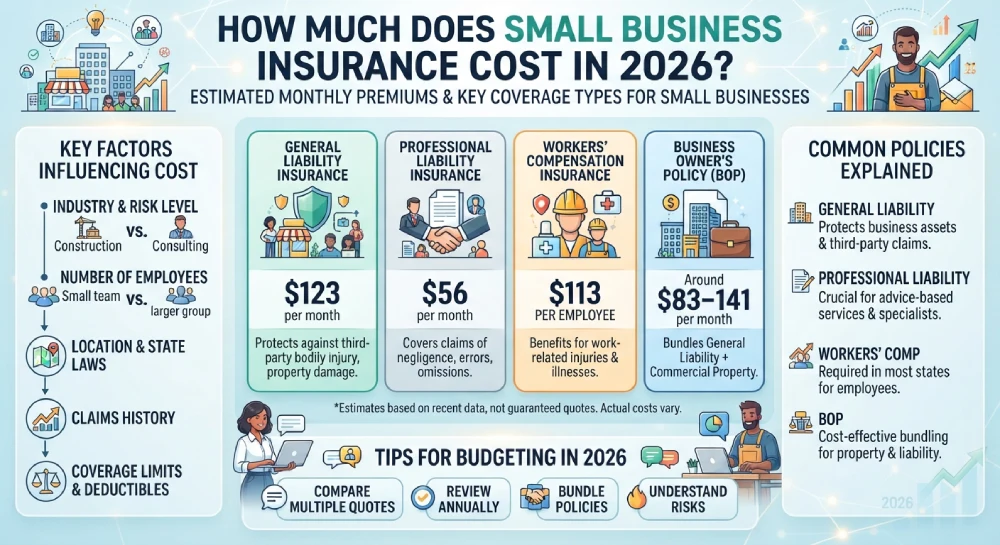
Any business doesn’t have a specific cost. MoneyGeek has recently calculated that general liability insurance is approximately $123 per month for companies with one to four employees, while professional liability averages around $56 per month. Averages differ among other insurers due to variations in customers, coverage and pricing practices.
Some handy cost comparisons in the U.S.:
| Coverage type | Example average monthly cost |
| General liability insurance | $123 |
| Professional liability insurance | $56 |
| Workers’ compensation insurance | $113 per employee |
| Business owner’s policy (BOP) | Around 83–141 |
All these figures are estimates and not guaranteed quotes. Business owner’s policy range is based on various insurance companies datasets and workers’ comp rates are highly based on payroll, job classification, and employee risk.
The total premium you pay each year will depend on the specific policies you have that you need. An out-of-the-house consultant might not be as highly paid as a construction company that has people, cars and expensive machinery.
What Types of Business Insurance Affect Your Costs?
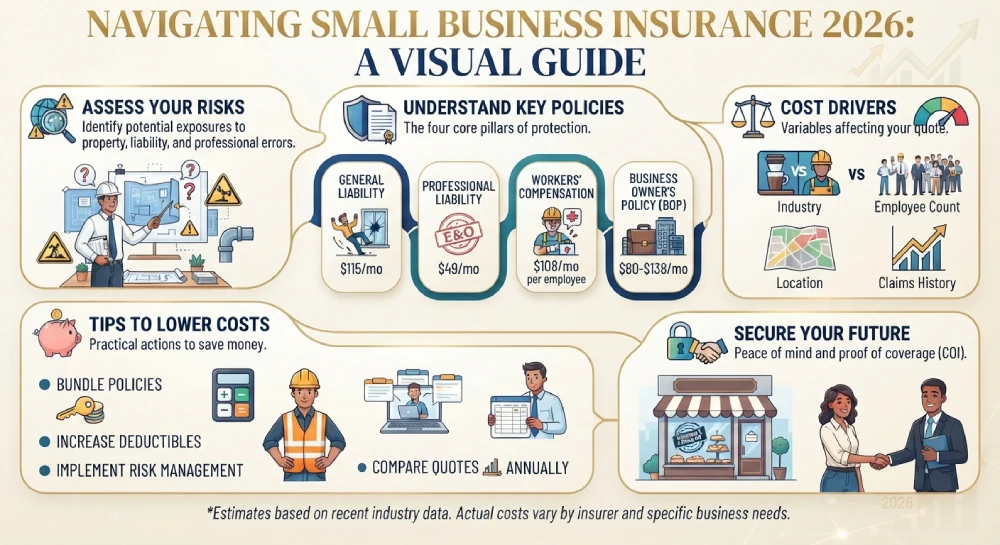
Your operations, contracts and the extent of your losses will determine which coverage you need. The following are policies that occur frequently.
General Liability Insurance
General liability insurance is used to protect against eligible third-party claims related to bodily injury, property damage and some personal or advertising injuries. For instance, if a customer sustains an injury in your business premises or if a person’s property is accidentally damaged by your work, it may be beneficial for your business to begin using it.
The premiums you will be charged will depend on your industry, revenue, location, claims history, coverage limits, and more. Firms that interact more with customers and/or have physical risks may charge a higher premium.
Professional Liability Insurance Coverage
For businesses that offer advice, specialized work and/or professional services, professional liability insurance coverage is crucial. It could be used to defend against a claim of negligence, errors, omissions or mistakes that result in a financial loss to a client.
This protection might be required by consultants, accountants, designers, and technology service providers. The costs are dependent on the services provided, client contracts, revenue, coverage limits and claims made in the past.
Workers’ Compensation Insurance
Typically, workers’ compensation insurance will provide benefits to eligible employees for medical costs and lost wages due to work injuries or illnesses, according to state laws.
Premiums may be based on payroll, employee job classification, claims history, and may vary by state where employees work. The costs for a business with office staff can be different than a business that has someone working on a construction job or in one of the other high risk jobs.
Business Owner’s Policy
Generally, a BOP (business owner’s policy) is a policy that bundles general liability and commercial property coverage. Depending on the policy, there may even be business interruption coverage.
It can be a good idea to bundle and often will save money when compared to buying the same coverage on an individual basis. Before deciding on a package, however, it is important to take into account the limitations, exclusions and options available.
What Are Business Insurance Services?
Business insurance services can include policy comparisons, risk assessments, coverage suggestions, certificate requests, policy renewal, and claims assistance. You can either deal directly with an insurer or via an independent insurance agent or broker.
When comparing providers, consider everything but the price. Determine if the policy is applicable to your actual business, if there is anything important that is excluded, and how the insurer deals with claims and changes of policy.
Request quotes that have similar coverage limits and deductibles. Otherwise, you just might have a lower price and not the protection you need.
What Is a Certificate of Insurance for Business?
A certificate of insurance for businesses is a document that presents some information regarding your insurance coverage. It may be requested by any client, landlord, lender or property owner before work can commence and/or before an agreement is signed.
Insurance certificate for business will contain such information as the named insured, insurance company, policy dates and types of coverage. It serves as proof of insurance, not the insurance policy itself or the changes to the policy.
Conclusion
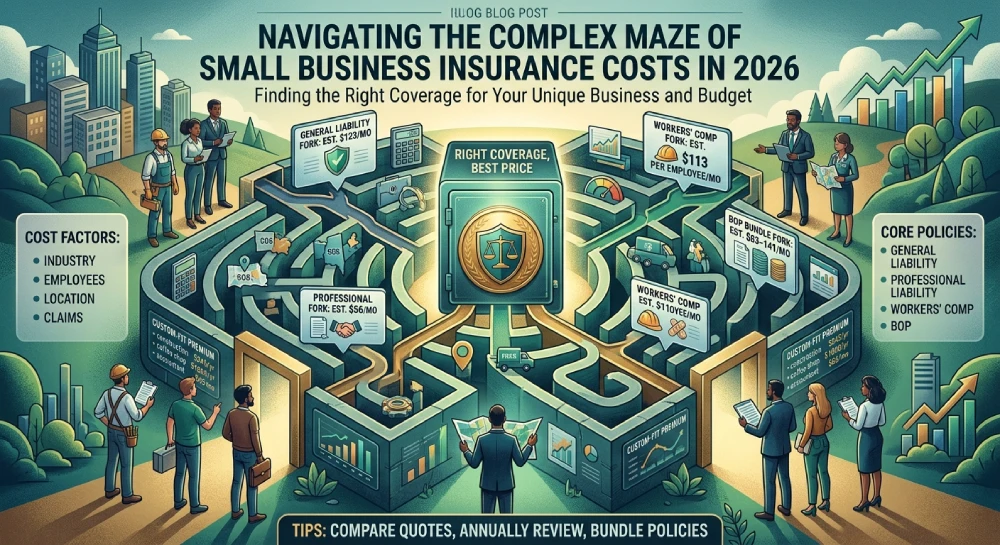
The amount of small business insurance costs in 2026 will depend on the industry, location, number of employees, claims history, coverage requirements, etc. Shop around for quotes, compare and contrast policies, and know your coverage before purchasing. The objective is to discover inexpensive protection that will guard your company without creating high-priced gaps.
Frequently Asked Questions
How much does small business insurance cost per month?
The price of a policy depends on the policy and business category. The price of some general liability policies are less than $100 per month, and some businesses that are considered high risk or have a wide range of coverage options may be much more expensive.
What is the cheapest type of business insurance?
There’s no one-size-fits-all cheapest choice. While some small companies might consider their general liability insurance to be fairly inexpensive, it’s important to get the right policy based on the risks that need to be addressed.
Is small business insurance legally required?
Requirements differ from state to state and in relation to the type of business activity. There are other types of coverage that may be required by a client, landlord, contract, or employers’ compensation.
Do I need professional liability insurance?
You may need it if your business provides professional advice or services and could face claims alleging errors, omissions, or negligence.
What is the difference between general liability and professional liability?
General liability generally addresses certain third-party injury and property damage claims. Professional liability generally addresses claims related to professional services, errors, or negligence.
What does a business insurance certificate prove?
It summarizes specified insurance information, such as policy dates and coverage types. It does not replace the policy itself or guarantee that every possible claim is covered.
How can I get proof of insurance for my business?
Contact your insurance company or agent and request a certificate of insurance. Provide the certificate holder’s details and any specific requirements from your client or landlord.
Can bundling policies reduce insurance costs?
It may. Some insurers offer bundled packages, but compare the total premium, limits, exclusions, and deductibles before deciding.
Does workers’ compensation insurance cost the same for every employee?
No. Pricing can depend on job classification, payroll, state rules, and claims history. Employees in higher-risk occupations may generate higher premiums.
How often should I review my business insurance?
Review it at least once a year and whenever your business changes significantly, including hiring employees, adding services, buying equipment, or expanding into another state.