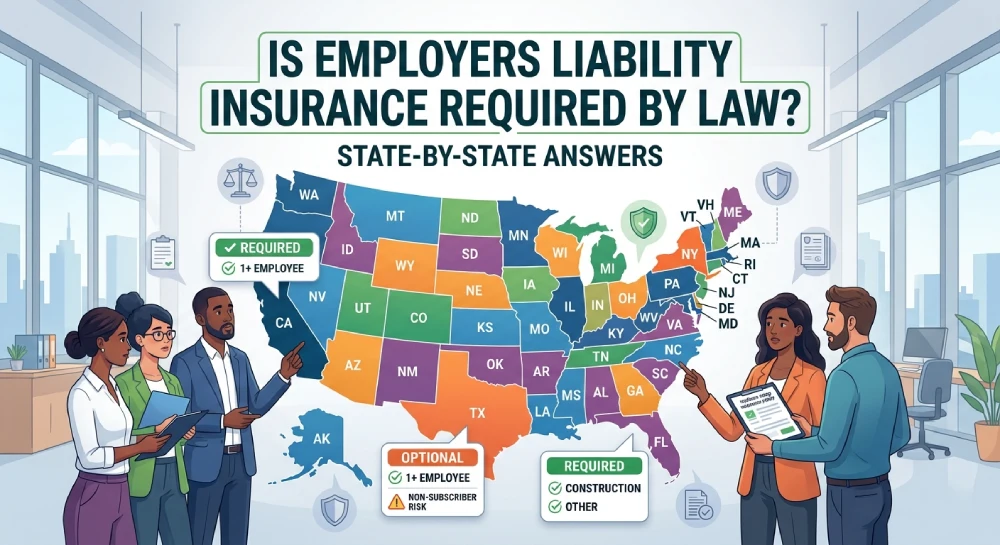
Do employers need to have employer’s liability insurance in the U.S.? This will depend on state legislation, type of business, and the number of employees. Many employers are required to have workers’ compensation insurance in most states; however, there are exceptions and different rules for each state.
This guide provides basic understanding of the best workers comp insurance for small business
requirements, state variations, and coverage.
What Is Employers Liability Insurance?
Employers liability insurance is insurance coverage that covers more than the typical workers compensation benefits for the business against certain employee injury related lawsuits. This is usually added to a worker’s compensation policy as Part Two.
If an employee is injured because of unsafe equipment, he or she could sue the employer. This coverage may assist in covering legal defense costs and covered damages, depending on policy terms and circumstances.
Is Employers Liability Insurance Required by Law?
Employers liability insurance is usually part of a workers compensation insurance policy, though it varies from state to state. Most states mandate that qualified employers have workers compensation coverage.

Key points include:
- Workers compensation: Many employers must provide this (check state regulations).
- Employers liability: Usually covered under workers compensation policies.
- Exceptions: There are exemptions for some businesses, owners and industries.
In Texas, a private employer can generally refuse to provide workers compensation coverage and South Dakota does not generally require it. However, without health insurance, there are greater legal and financial risks.
What Are the State-by-State Requirements?
State laws determine when businesses must carry workers compensation insurance.
| State | General requirement |
| California | Generally required even with one employee, subject to exceptions. |
| New York | Required for most employers, with statutory exceptions. |
| Florida | Generally required for construction businesses with one or more employees and many other businesses with four or more. |
| Texas | Generally optional for private employers. |
| South Dakota | Generally not mandatory. |
| Other states | Requirements vary by employee count, industry, and exemptions. |
These are general guidelines, not complete legal advice. Check the U.S. Department of Labor’s state directory for official state resources.
What Does Workers Compensation Cover?
The expected benefits from a workers comp policy are for the workers to receive compensation for injuries or illnesses that occur during work activities.
Common benefits include:
- Medical treatment and rehabilitation.
- Partial wage replacement.
- Disability benefits.
- Death benefits for eligible dependents.
This is why it’s important for businesses to know what does workers comp cover to help them differentiate employee benefits from claims against the employer.
How Much Does Workers Compensation Insurance Cost?
The workers comp insurance cost depends on payroll, employee duties, industry risks, claims history, and location.
Businesses can manage costs by:
- Comparing quotes from licensed workers compensation insurers.
- Maintaining workplace safety procedures.
- Classifying employees correctly.
- Reviewing policy limits and payroll estimates.
For workers compensation insurance for small businesses, comparing coverage and exclusions is just as important as comparing prices.
How Can Small Businesses Choose the Right Coverage?
State regulations and available coverage can be explained by a workers compensation insurance agent. Prior to purchasing insurance, companies must to:
- Verify the state’s insurance regulations.
- Verify any applicable contractor and owner exemptions.
- Examine the exemptions and responsibility limits.
- Check coverage for workers who are spread throughout several states.
When comparing insurance with NEXT Insurance workers comp providers, ask important questions regarding eligibility, existing coverage, and policy conditions.
A workers comp ghost policy is one that is issued without employee payroll being involved; this typically happens when a contractor needs an insurance certificate. It may not comply with all state regulations or include subcontractors.
What Happens If a Business Has No Required Coverage?
Employers who are not properly insured could be liable for stop-work orders, fines, penalties, and costs of workplace injuries. Uninsured employers also run the risk of further legal liability.
Medical costs and the threat of lawsuits can cause significant financial issues for small businesses even if they’re not mandated by law.

Conclusion:
Understanding employers liability insurance and state workers compensation laws helps businesses avoid compliance problems and unexpected expenses. Before hiring employees or expanding operations, make sure to assess state legal requirements and compare policy coverage and coverage limits.
Frequently Asked Questions
Is employers liability insurance mandatory in every state?
No. This is dependent upon state requirements and is often provided under an employer’s liability policy. Employers should review local laws, exemptions and contractual requirements before deciding on cover.
Is employers liability insurance the same as workers compensation?
No. Workers compensation normally covers eligible workplace injuries and employers liability covers specific employee injury-related claims against the employer, subject to policy terms and exclusions.
Do small businesses need this insurance?
Many small businesses must carry workers compensation once they meet their state’s requirements. Employers liability coverage is typically included, but there are obligations associated with the number of employees, industry, and exemptions.
Does Texas require workers compensation insurance?
In most other states, private employers can choose not to comply. But there are also rules that apply to non-subscribers that could mean that they are exposed to higher risk of employee injury lawsuits.
What happens if a business lacks required coverage?
Employers risk fines and penalties, stop-work orders and liability for work injury costs, depending upon state law. Uninsured employers may also have legal remedies for employees.
How does employers liability differ from general liability?
General liability typically covers certain third-party bodily injury and property damage claims. Employers liability is focused on some employee injury claims against the employer.
How much coverage does a business need?
The limits are relevant to the business risks, contractual obligations and possible claim costs. Employers should ask a licensed insurance professional to consult on policy limits.
Can employers liability coverage be purchased separately?
It is commonly included in workers compensation policies. Some insurance companies and states may offer separate coverages; businesses should check with their insurance provider.
Are independent contractors covered by workers compensation?
Not automatically. Classification is based on state law and the relationship of the job. The employer should check for contractor status and insurance documentation.
Where can employers check state requirements?
Call the state workers comp agency/insurance department. The U.S. Department of Labor’s state directory offers links to official resources.